DESIGNED FOR COLLABORATIVE INNOVATION
your next best product starts here
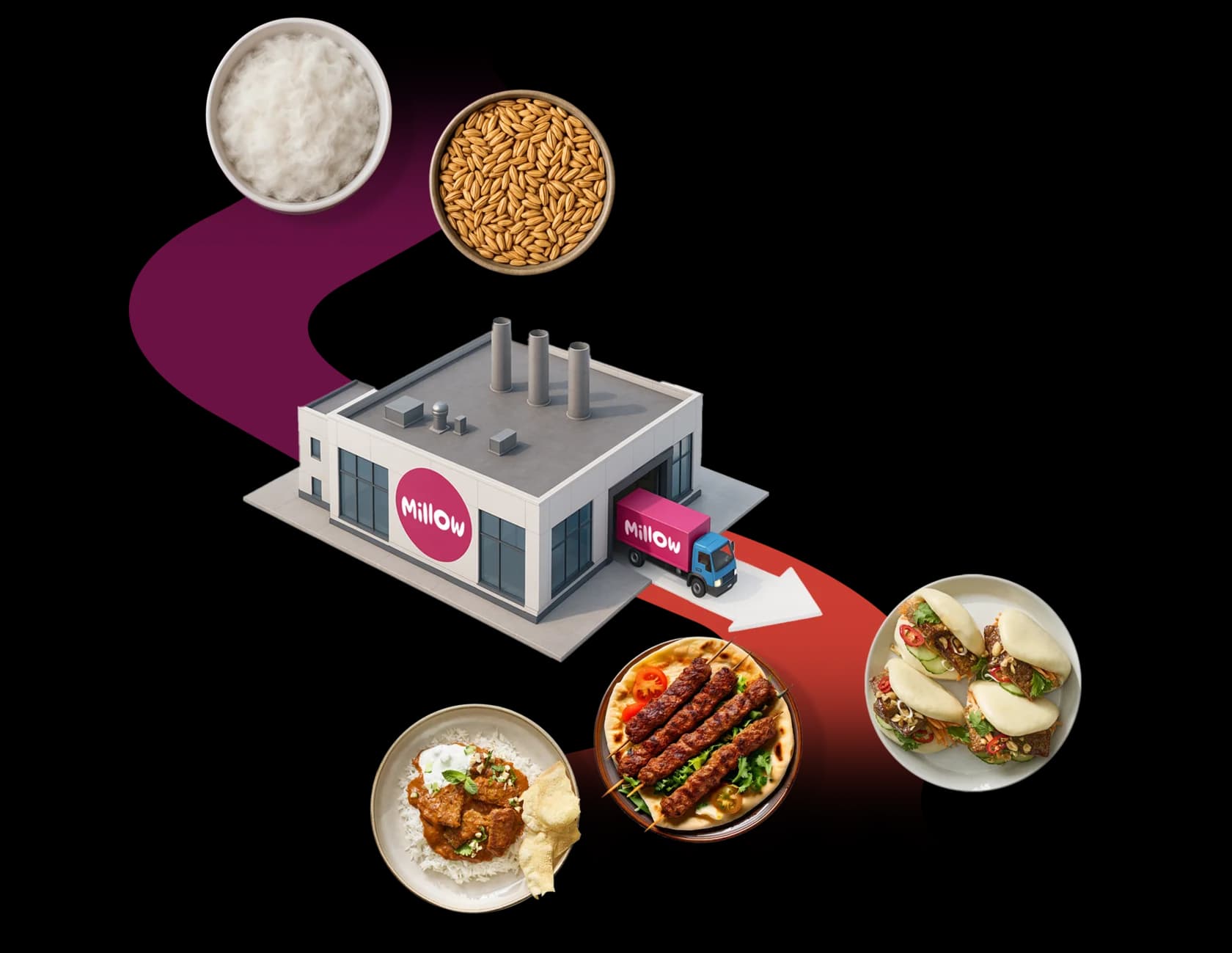
Millow offers patented dry-state fermentation, modular S-Unit bioreactors, binder-free texture engineering (MUTE), advanced analytical capabilities, and comprehensive Technology Readiness Level (TRL) 1-8 development integrated into a single cohesive platform.





GLOBAL GRANT PARTNERSHIPS
Strengthen your partnership with Millow
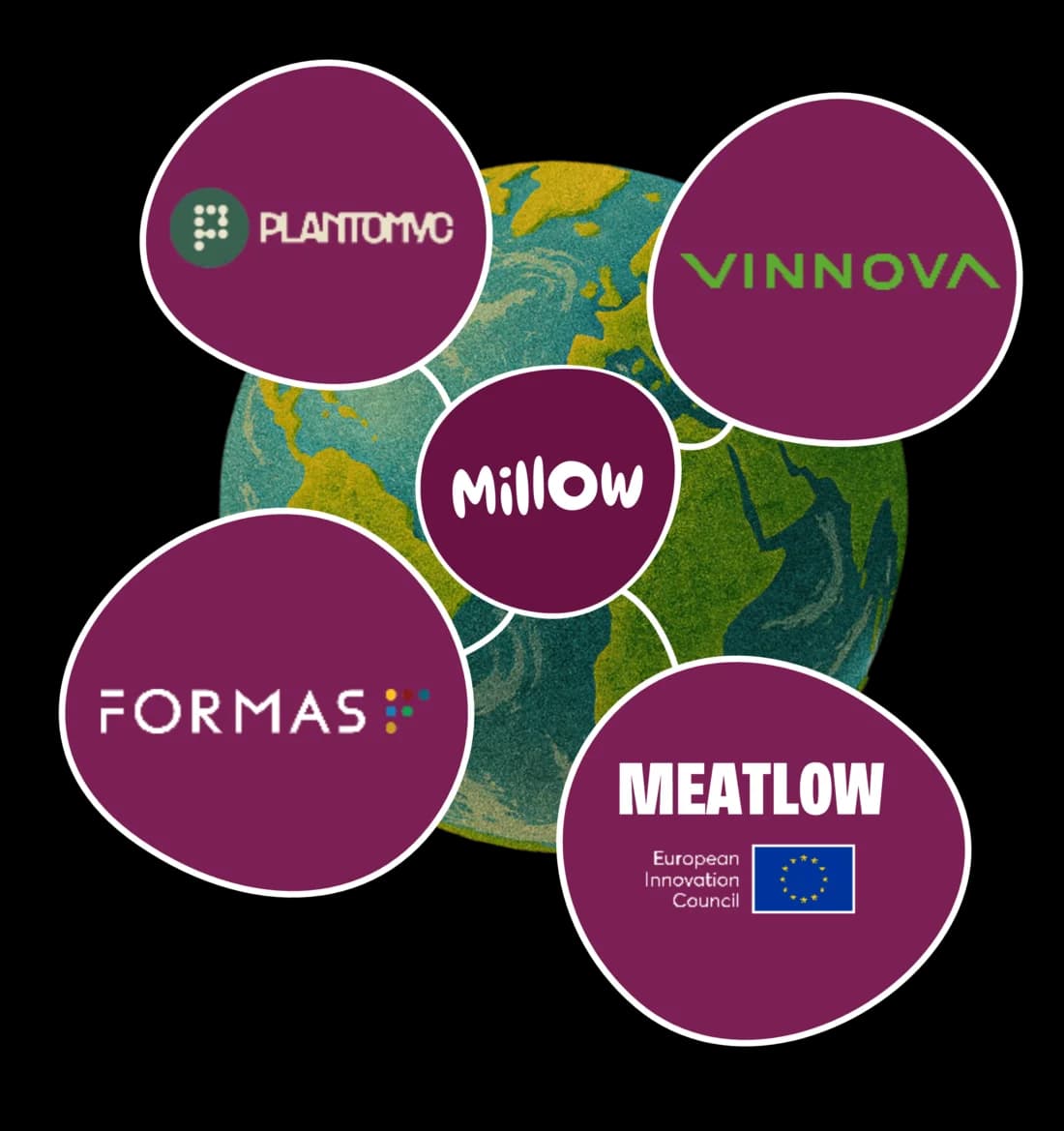
Collaborating with Millow significantly enhances the competitiveness of grant proposals and consortium projects. Millow's extensive experience includes participation in Horizon Europe, Formas, Vinnova, and prestigious solo grants like the EIC Accelerator. Our robust capabilities, patented dry-state fermentation technology, advanced laboratories, and experienced team efficiently translate research into scalable industrial solutions.
One process. Endless clean-label output.
the engine
Nordic oats in. Whole protein and fiber out. Between them: three decades of fermentation science, run as a repeatable industrial process - not a recipe.
Dry-state fermentation
Mycelium grown on Nordic oats with minimal moisture - inspired by how plants actually grow.
MUTE texture engineering
Precise control of fungal growth shapes mycelium into fibrous, meat-like texture.
Modular S-Unit bioreactors
Scalable 500 kg/day modules, upcycling agricultural by-products on 24-hour cycles.



Built to scale, not to pilot
industrial capability
Modular by design: every S-Unit bioreactor you add is more capacity, same process. That is the difference between a platform and a product line.
- TRL 8
- industrial readiness
- <24h
- fermentation cycle
- 1,500 kg
- per day, Gothenburg facility
- +500 kg
- per S-Unit bioreactor module
Five EPO patent families · EP 4307913
Modular technology

Each S-Unit produces
500kg
per day
500kgper day
500kgper day
500kgper day
500kgper day
Scalable industrial infrastructure
500 kilograms at a time
Millow's first industrial-scale production facility in Gothenburg is commissioning to generate 1,500 kilograms of sustainable protein daily, scalable in increments of 500 kilograms per modular S-Unit bioreactor without extended construction periods. Competitive with traditional plant-based proteins, Millow's modular technology integrates seamlessly into international grain processing hubs, including Nordic oats and food derivatives.

Advanced fermentation laboratory
measured in-house, batch by batch
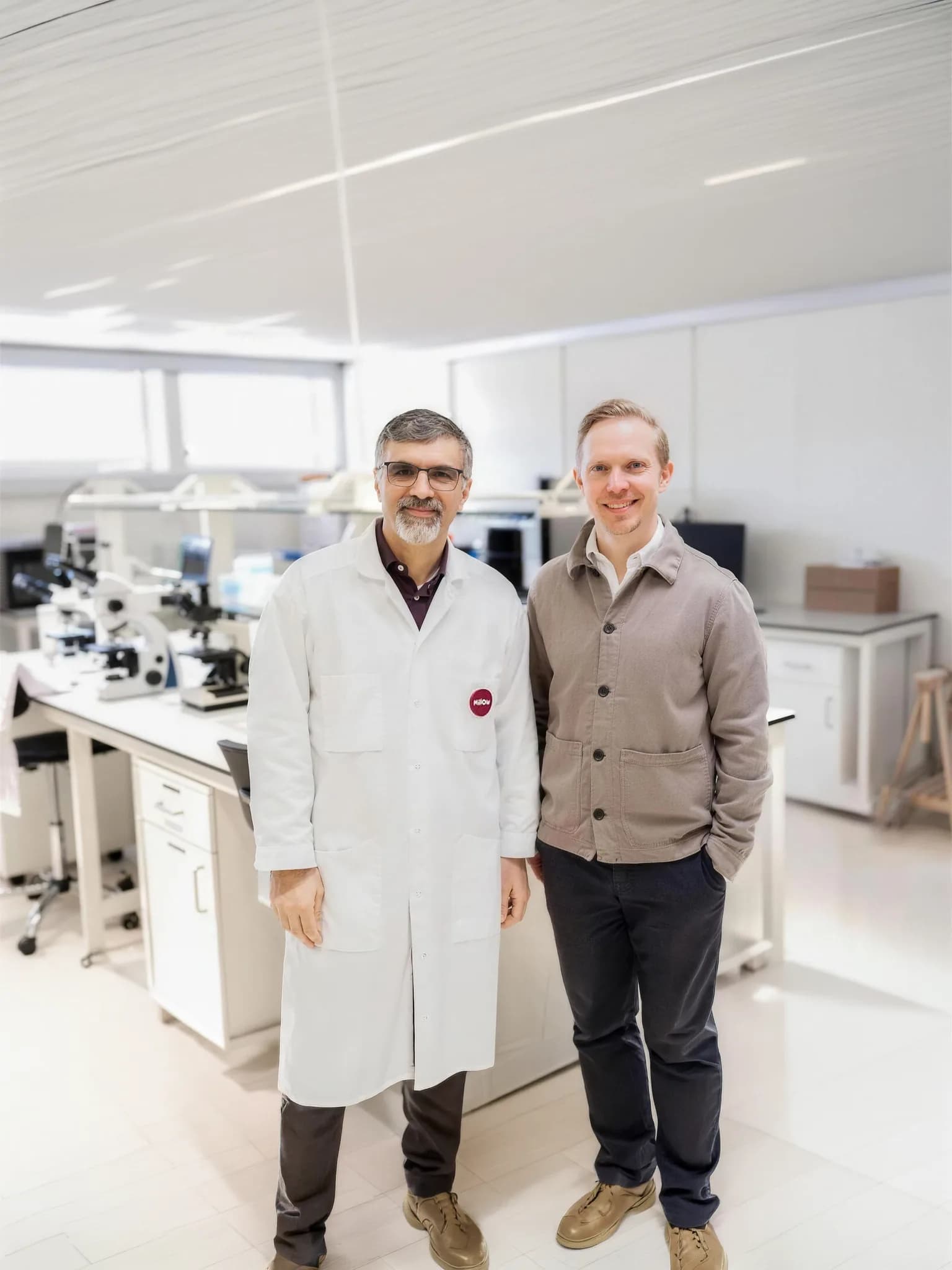
Millow's advanced fermentation laboratory runs comprehensive analytical and quality-control testing in-house. Every batch is held to commercial production standards through rigorous prototype testing - so the platform delivers reliable, scalable fermentation solutions.
- Microbial analytics
- Metabolite profiling
- Sensory evaluations
- Inline NIR quality control
Scientific expertise, industrial know-how - led by Prof. Mohammad Taherzadeh, with 500+ peer-reviewed publications and 47,000+ citations.
A platform runs on more than tanks
tech infrastructure
Fermentation is the hardware. The software is just as real: product data, traceability and content served from Millow's own integrated systems.
Partners build on an engine that speaks data, not just a factory that ships boxes.
- Product & traceability data as a first-class output
- An integrated content platform - the same stack this site is built to run on
- Built for partners to plug into, not just buy from
What it eats, and what it saves
one engine, many feedstocks
The platform doesn't need one perfect input. It generalises - from Nordic oats to industrial side streams - turning what the food system throws away into clean protein and fiber. That breadth is the platform; the products are the receipts.
- InputOats & side streams
- EngineDry-state fermentation
- OutputProtein & fiber
Bring your hardest requirement.
the engine solves it
If it needs clean-label protein or fiber at industrial scale, the platform is where it gets solved.
